
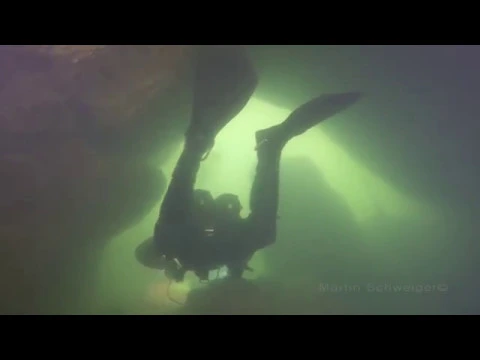
12 caves · down to 160 m · 1 suitable for an intro team
Cave diving in Slovenia
- Caves12
- Max depth160 m
- Water temperature4–16 °C
- Dive centres3
Diving and fills
Dive here with
Fills nearby
- Fill stationDruštvo Kisik – Oxygen / watersports.si (Bled)Air to 232 bar; nitrox up to 40%; trimix, oxygen and mixes above 40% on requestRoute ↗
- Fill stationNorik-sub (Ljubljana)Air, nitrox, oxygen, trimix and heliox; 200 or 300 barRoute ↗
- Fill stationReef (Nova Gorica)Air, nitrox and trimix (per the TDI register)Route ↗
Why come here
Slovenia is where the word karst comes from, and it shows underwater: cold springs and water caves such as the Retovje springs near Vrhnika, where the Ljubljanica rises, and the Bilpa on the Kolpa. Almost everything is full cave, with a hole in the bed of the Soča at Plave as a cavern dive. Ljubljana is central. Do plan ahead: foreigners may dive caves and springs only after notifying the local police, with accident and life insurance, proof of training and together with a qualified Slovenian diver; compressed air is allowed to -40 m, deeper you dive on trimix. After rain the springs gush strongly and you dive only at low water, and Divje jezero and the Krupa are closed.
Don't miss
- Veliko okence (Retovje): one of the two strongest springs of Retovje, the valley where the Velika Ljubljanica rises, studied since 1939 and dived year-round by a Slovenian dive school's cave team.
- Bilpa: the karst spring where the Rinža, which sinks a few kilometres downstream of Kočevje, comes back up, with a creek that flows straight into the Kolpa; dive only at low water, as the spring gushes strongly after rain.
On a rest day
- Postojna Cave: Ride the double-track cave railway 3.7 km into the cave and see the olm, known here as the 'baby dragon'.
- Škocjan Caves: Walk through one of the largest known underground river canyons in the world, where the Reka rushes through the limestone in rapids and waterfalls.
- Lake Bled: Take a rowed pletna boat to the island with its pilgrimage church and look up at the medieval castle above the lake, ~55 km from Ljubljana.
All 12 caves
7 closed not shown ·
| Site | Max depth | Type | Certification |
|---|---|---|---|
| BilpaNot known yet · Full cave | – | Not known yet | Full cave |
| Luknja pri PlavahNot known yet · Cavern | 24 m | Not known yet | Cavern |
| Malo okence (Retovje)Not known yet · Full cave | 45 m | Not known yet | Full cave |
| SuhadolcaNot known yet · Full cave | – | Not known yet | Full cave |
| Veliko okence (Retovje)Not known yet · Full cave | 25 m | Not known yet | Full cave |
Certification requirements, configurations and trimix depths are estimates for planning. Always check them locally and dive within your training.
Map
Dive centres and fill stations
3 dive centres, fill stations and instructors
Dive centre
Društvo Kisik – Oxygen / watersports.si (Bled)
Bled (Gorenjska); exact address not published
- Air to 232 bar
- Full cave, CCR · PSAI
- Bilpa, Veliko okence (Retovje), Malo okence (Retovje), Suhadolca
Dive centre
Norik-sub (Ljubljana)
Celovška cesta 25, 1000 Ljubljana (Kopališče Tivoli)
- Air, nitrox, oxygen, trimix and heliox
- Cavern, Intro to cave, Full cave, Trimix, CCR · ANDI
Fill station
Reef (Nova Gorica)
Vipavska cesta 54, 5000 Nova Gorica
- Air, nitrox and trimix
Order: partners first, clearly marked as partner; then dive centres by distance from Ljubljana and independent instructors by name. Not a recommendation: check what they offer yourself.
On this list, or should you be? Get a free partner card →Where to stay
Find a place near Ljubljana, Vrhnika, Idrija, Postojna, Kočevje, Semič
Villages that work well as a base for the caves in this region. Find a place for your team:
- LjubljanaBooking.com ↗
- VrhnikaBooking.com ↗
- IdrijaBooking.com ↗
- PostojnaBooking.com ↗
- KočevjeBooking.com ↗
- SemičBooking.com ↗
The links to Booking.com are affiliate links: if you book through one, DiveTripPlanner earns a small commission. You pay the same.
Practical info: rules, fills and emergency numbers
Emergencies
- 112 — the regional dispatch centre also reaches the underwater rescue service; in cave accidents the cave rescue service JRS turns out. Chambers (SPZ list 2021): Ljubljana, Medical Faculty, Zaloška 4 (8-person chamber), +386 1 543 7537; mobile one-person transport chamber in Ankaran, duty number +386 5 652 8118; Trieste (IT), Strada di Fiume 447, +39 040 399 4720; Rijeka (HR), KBC Rijeka, Tome Strižića 3, +385 51 407 435; Pula (HR), OXY, Santoriova 24a, +385 52 215 663. Always call ahead. DAN Europe +39 06 4211 5685.
Access and rules
- Law for foreigners: diving in caves, mines, springs, underground rivers and under ice is 'technical diving' under the Slovenian Drowning Protection Act (ZVU, 2000). Foreigners may only do it after notifying the local police station of place and time (you get a confirmation), with accident and life insurance, proof of training, and together with a qualified Slovenian diver. The police still pointed this out at the Bilpa in 2009; check with a Slovenian dive centre or the Slovenska potapljaška zveza (SPZ) whether it still applies.
- Caves are state property and protected (ZVPJ): caves with free access, with controlled access (registered and supervised entry only) and closed caves (research only, with a ministry permit). Motorised vehicles and craft are banned in caves; electric scooters are only allowed for sump research. The official list with the access regime of each cave is annex 1 of ARSO (https://www.gov.si/assets/organi-v-sestavi/ARSO/Javne-objave/Priloga-1_Seznam-naravnih-vrednot-delov-narave-ki-imajo-lastnosti-jame-v-skladu-z-zakonom-ki-doloca-varstvo-podzemnih-ja.pdf); check locally whether it is up to date. By law, independent caving requires a certificate of qualification from the Slovenian ministry; according to the JZS this also applies to cave diving. It is not a permit but proof of your training, free and without expiry, applied for with statements from your club (https://www.jamarska-zveza.si/index.php/foreigners/permit-ic). The Jamarska zveza Slovenije (JZS) tests cavers, keeps the cave register and runs the cave rescue service (JRS).
- In Slovenia springs also count as caves. Most caves are open to visit, but some have restricted access or are temporarily closed. Contact local cavers or cave divers before every visit about the current situation and rules for each cave, and follow the UIS code of conduct (https://uis-speleo.org/wp-content/uploads/2020/03/Code-of-Ethics-of-the-UIS-English-Language.pdf). Documentation of explorations (surveys, descriptions) must be submitted to the Slovenian cave registry. Information for foreigners: Jamarska zveza Slovenije (https://www.jamarska-zveza.si/index.php/foreigners).
- Nature and drinking water: the minister can regulate or ban diving in nature- and water-protection areas (ZVU). For dive sites in Triglav National Park the SPZ atlas asks for the park's (TNP) consent; Zelenci needs a special permit. Divje jezero is a natural monument; along the whole Krupa (a natural monument) boating, rafting and recreational diving are banned.
Gas and fills
- Gas: Norik-sub in Ljubljana fills air, nitrox, O₂, trimix and heliox to 300 bar (Mon–Fri 9:00–18:00). Društvo Kisik – Oxygen (watersports.si, Bled) fills air to 232 bar and nitrox up to 40%; trimix and O₂ on request. Both teach CCR courses; sofnolime: ask.
Water and season
- Water: karst springs are cold year-round (Kamniška Bistrica max 6 °C, the Ribnica springs ~7 °C, Krupa ~10 °C in summer): drysuit. After heavy rain springs such as the Bilpa and Divje jezero flow hard. Slovenian cave divers dive all year.
Safety
- Compressed air is allowed to -40 m in Slovenia; deeper you dive on trimix (ZVU).
Getting around
- Bases: Ljubljana (central, fill station), Vrhnika (Retovje), Idrija (Divje jezero), Postojna (Planinska jama) or Kočevje (Bilpa).
Rest day
- Rest day: Idrija (UNESCO Global Geopark), the circular walk past the Retovje springs, or a visit to Planinska jama.
Good to know
- Coast: the Slovenian coast at Piran has reefs and wrecks but no known sea caves.
News
News articles that mention one of the caves in this region, collected automatically and not checked by us.
Access and rules change: check what applies locally right before your trip. Source: GDELT Project and the news feeds of diving magazines.
Searched automatically, last on 13 Nov 2026.
Going to Slovenia with your team?
Marcel finds the sites that match your team's certifications.
Plan a trip