
7 sites · down to 87 m
Cave diving in Austria
- Sites7
- Max depth87 m
- Water temperature5–7.5 °C
- Dive centres4
Diving and fills
Dive here with
No dive centre guides here yet. Do you dive here with guests? Add your centre for free →
Fills nearby
- Fill stationNautilus Tauchcenter (Unterach am Attersee)Air (also 24/7 at the outdoor fill station), nitrox, trimix and argon; O₂ and pressure (200/300 bar): askRoute ↗
- Fill stationATS DiveCenter Seefeld (Steinbach am Attersee)Air, nitrox and trimix (per Upper Austria's tourism website; not on its own website) — askRoute ↗
- Fill stationUnder Pressure Divecenter (Weyregg am Attersee)Air and nitrox (EAN28, 32 and 36) to 220 bar, trimix, oxygen up to 100 % and helium; argon on requestRoute ↗
Why come here
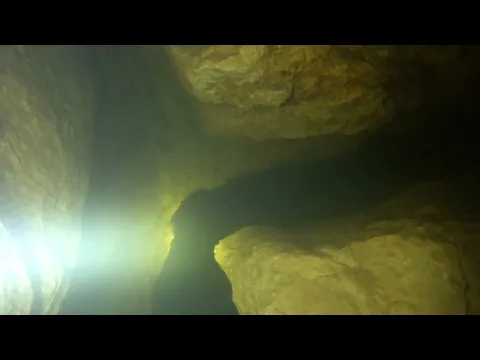
Around Obertraun on the Hallstätter See, cold, deep karst springs rise from the Dachstein massif and the Northern Limestone Alps: the Kessel, an entrance to the more than 100 km Hirlatzhöhle, the Hirschbrunn, the sumps of the Koppenbrüllerhöhle and further afield the Rötelseehöhle, the Gollinger Wasserfall and the Palfauer Wasserloch. It is all full cave, to around -80 m, in water of 4–7 °C, so with a drysuit and heating. There are no freely accessible cave dives: almost every spring is a Naturdenkmal or a protected cave, permits in practice go to the research teams of the Höhlenvereine, and the Pießling-Ursprung is closed. Snowmelt in spring and heavy rain bring high discharge; winter brings low water and the best visibility.
Don't miss
- Kessel (Hallstatt): an episodic giant karst spring of the Dachstein and one of the Hirlatzhöhle entrances usable only by divers; about twice a year it overflows and the water pours 200 m down to the lake.
- Hirschbrunn: a periodic giant spring that was a tourist attraction in earlier centuries and comes alive every afternoon during snowmelt, when meltwater from the plateau arrives.
- Koppenbrüllerhöhle: an active water cave where the mountain 'roars' after heavy rain, Upper Austria's first show cave since 1910; cave divers dive it, among other times, at the end of January, outside the tourist season.
On a rest day
- Dachstein Giant Ice Cave: Take the cable car from Obertraun up the Krippenstein and follow a guide through an underground landscape of cave glaciers and ice formations.
- 5fingers: A viewing platform on the Krippenstein jutting out from the rock face, ~30–40 minutes' walk from the top station, with views over the World Heritage region.
- Hallstatt Salt Mine: Ride the funicular up and go down into a salt mine with some 7,000 years of mining history, with wooden miners' slides and a staircase about 2,800 years old.
- Hallstatt: The 'salt settlement' on the lake, heart of the Hallstatt-Dachstein / Salzkammergut World Heritage site, where salt has been produced since the Bronze Age.
All 7 sites
3 closed not shown ·
| Site | Max depth | Type | Certification |
|---|---|---|---|
| HirschbrunnPermission neededSmall cylinders / no-mount · Full cave | 80 m | Small cylinders / no-mount | Full cave |
| Kessel (Hallstatt)Permission neededSidemount · Full cave | 65 m | Sidemount | Full cave |
| KoppenbrüllerhöhlePermission neededNot known yet · Full cave | – | Not known yet | Full cave |
| RötelseehöhlePermission neededNot known yet · Full cave | 48 m | Not known yet | Full cave |
Certification requirements, configurations and trimix depths are estimates for planning. Always check them locally and dive within your training.
Map
Dive centres and fill stations
4 dive centres, fill stations and instructors
Fill station
Nautilus Tauchcenter (Unterach am Attersee)
Atterseestraße 86, 4866 Unterach am Attersee
- Air, nitrox, trimix and argon
- Dive equipment
Dive centre
ATS DiveCenter Seefeld (Steinbach am Attersee)
Seefeld 14, 4853 Steinbach am Attersee
- Air, nitrox and trimix (per Upper Austria's tourism website
- CCR, Trimix · IANTD, SSI
- Dive gear and cylinders (tourism website); rebreathers to try on test days
Dive centre
Under Pressure Divecenter (Weyregg am Attersee)
Landeroith 1, 4852 Weyregg am Attersee
- Air and nitrox to 220 bar, trimix, oxygen up to 100 % and helium
- Sidemount, Trimix · SDI, TDI, CMAS, SSI
- Dive gear and scooters
Fill station
Tauchclub Dachstein-Salzkammergut (Hallstatt)
Seestraße 113, 4830 Hallstatt (hallstatt.net lists Gamsjaga 2a, 5342 Abersee)
- Fill station on site
- Dive equipment
Order: partners first, clearly marked as partner; then dive centres by distance from Obertraun and independent instructors by name. Not a recommendation: check what they offer yourself.
On this list, or should you be? Get a free partner card →Where to stay
Find a place near Obertraun, Hallstatt, Bad Ischl, Gmunden, Windischgarsten, Golling an der Salzach
Villages that work well as a base for the caves in this region. Find a place for your team:
- ObertraunBooking.com ↗
- HallstattBooking.com ↗
- Bad IschlBooking.com ↗
- GmundenBooking.com ↗
- WindischgarstenBooking.com ↗
- Golling an der SalzachBooking.com ↗
The links to Booking.com are affiliate links: if you book through one, DiveTripPlanner earns a small commission. You pay the same.
Practical info: rules, fills and emergency numbers
Emergencies
- 112 or 144 (Rettung; say 'Tauchunfall'). For a cave accident: Alpin-Notruf 140 — the Austrian cave rescue has its own diving team. DAN Europe: +39 06 4211 5685.
- Hyperbaric chamber: Graz, Klinische Abteilung für Thorax- und Hyperbare Chirurgie (Med Uni Graz), Auenbruggerplatz 29, 8036 Graz — the only Austrian chamber with guaranteed 24-hour readiness; emergency +43 316 385 12803 (GTÜM list, Jan 2025). Upper Austria's diving-accident page also lists Munich (+49 89 40 66 55, 24/7) and Klinikum Traunstein (+49 172 836 63 50).
Access and rules
- No freely accessible cave dives: almost all springs and caves are a Naturdenkmal or a 'besonders geschützte Höhle'. Kessel: diving prohibited without an exemption permit (BH Gmunden); according to a local cave diver the police check. Hirschbrunn: permission from the Upper Austrian nature-protection authority. Rötelseehöhle: land of the Österreichische Bundesforste (contract needed). Koppenbrüllerhöhle: show cave, only via the operator. Pießling-Ursprung: diving ban since 1987. In practice permits go to the research teams of the Höhlenvereine (for the Kessel in 2012: the Landesverein für Höhlenkunde in Oberösterreich) — ask well in advance.
Gas and fills
- Gas: at the Attersee (~1 h from Obertraun) Nautilus in Unterach fills (air 24/7 at an outdoor station, nitrox, trimix, argon; rebreather support). In Hallstatt the Tauchclub Dachstein-Salzkammergut has a fill station — which gases: ask. Ask everywhere in advance about O₂ and sofnolime.
Water and season
- Water 4–7 °C (Pießling ~4 °C, Kessel and Gollinger 5–6 °C, Rötelsee ~6 °C, Koppenbrüllerhöhle ~7 °C): drysuit and heating. Snowmelt (spring) and heavy rain bring high discharge — Pießling up to ~40 m³/s, Gollinger up to 42 m³/s; the Hirschbrunn then becomes active every afternoon and the Kessel overflows about twice a year on average. Winter brings low water and the best visibility (Pießling 30–50 m). The known entrances lie at 508–710 m.
Rest day
- Non-diving days: a tour of the Koppenbrüllerhöhle (May–September daily, ~1.5 h); the Gollinger Wasserfall (entry fee; ~15–18 min walk to below the cave mouth above the upper fall); the Palfauer Wasserlochklamm (April–October, stairs and a suspension bridge).
Good to know
- According to the VHO (Nov 2026) Austria is not a good country for cave diving: prohibited almost everywhere or very hard to reach, often tight and murky, and so nothing for a dive guide.
- Salzburg (Gollinger Wasserfall): in a 'besonders geschützte Höhle' any intervention contrary to the protection purpose is prohibited; cave expeditions of more than 3 days need a permit from the Landesregierung; fines up to €7,300 (Salzburg cave law).
- Grüner See (Tragöß, Styria): not a cave, but often asked about — diving has been banned by the private owner since 1 January 2016 (stirred-up sediment threatens the green colour); offenders risk a trespass lawsuit.
News
No recent news found about the caves in this region.
Searched automatically, last on 13 Nov 2026.
Going to Austria with your team?
Marcel finds the sites that match your team's certifications.
Plan a trip